
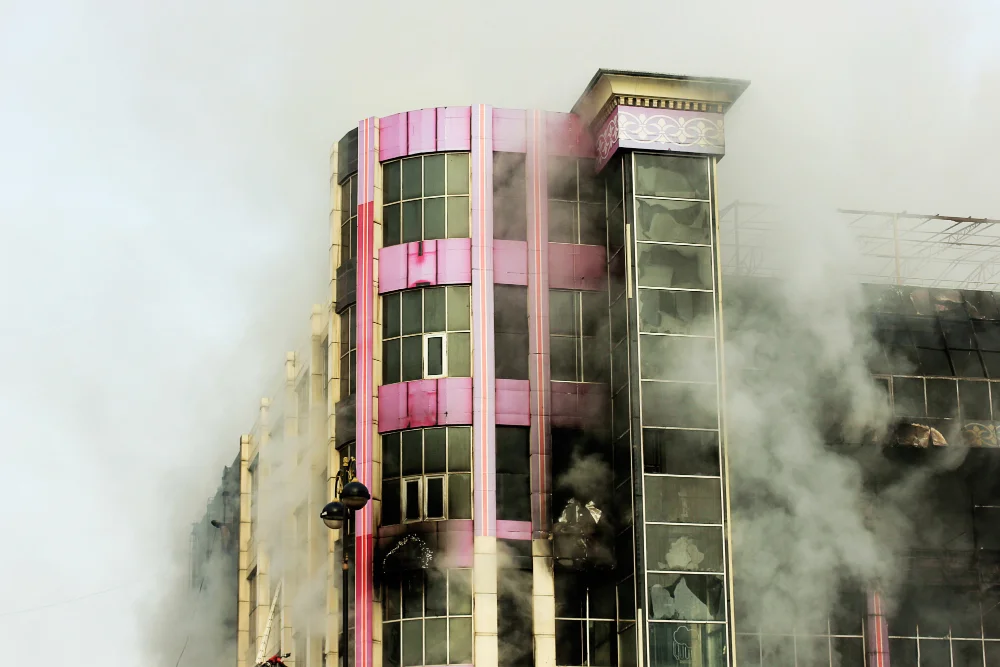
In the early hours of June 3, 2025, a fire broke out in the atrium area of BIG Mall Samarinda, one of the largest shopping centers in East Kalimantan.
The fire, which started from an electrical short circuit in a clothing store, quickly sent thick smoke billowing through every floor of the building. When it mattered most, the automatic sprinkler system failed to activate.
What made it worse was that the local Fire Department (Disdamkar) had previously recommended system improvements to the building management, but those recommendations were never acted upon.
As a result, 25 people suffered respiratory problems and 9 were rushed to Hermina Hospital Samarinda. Mall operations were suspended indefinitely, triggering massive financial losses and a serious blow to the facility’s reputation.
The story did not end there. Less than two months later, on July 17, 2025, fire broke out again on the same floor.
The sprinklers still were not working because no comprehensive repairs had been made after the first incident. Two fires at the same location, with the same system failure, within 60 days.
This case is a stark reminder for commercial building managers and industrial facility operators that ignoring the reliability of a fire protection system is the same as gambling with human lives and business continuity.
To prevent similar incidents and stop operational losses before they happen, Lumeshield breaks down the most common mistakes in fire protection system design and maintenance, along with practical mitigation strategies to avoid them.
Why Fire Protection Design Errors Are a Strategic Risk
There is one distinction that decision-makers often overlook. A compliant fire protection system is not necessarily an effective one.
Compliant means the system meets minimum regulatory requirements on paper. Effective means the system can actually respond to an incident at the right intensity, in the right location, under real hazard conditions.
The BIG Mall Samarinda case illustrates this perfectly. The sprinkler network was physically installed. But when a real emergency occurred, it did not work. From a business perspective, the consequences of system failure stack up fast.
Operational downtime for a mid-scale mall closure lasting one week can mean losses of Rp 5 to 20 billion, depending on occupancy rates and tenant profiles.
If an investigation finds that the system was not maintained or did not function as declared, insurance claims can be rejected entirely.
Post-fire repairs and system reconstruction typically cost three to five times more than a preventive evaluation done before an incident.
Under Law No. 28 of 2002 on Buildings and occupational health and safety regulations, negligent facility managers can face criminal liability, including at the board level.
This happened in the Terra Drone building fire case in late 2025. A single incident can also worsen a facility’s risk profile with insurers for years to come.
The Real Impact of Fire Protection Design Failures
Design failures in fire protection systems are not always visible. A system can appear to be functioning normally during routine inspections, then fail completely when an actual fire occurs.
This happens because standard inspections rarely simulate the extreme scenarios that match the real risk profile of a given facility.
The most common impacts of poor design include undetected early-stage fire because detectors are mismatched to the type of hazard in that area, suppression systems that cannot handle the actual fire load, uncontrolled fire spread due to inadequate compartmentation, large-scale facility damage that exceeds initial estimates, prolonged operational disruption with costs far exceeding physical damage, and exposure to criminal liability and insurance claim denial.
Main Categories of Fire Protection Design Errors
1. Design Not Based on Actual Risk Assessment
Every building has a unique combination of materials, layout, activities, and occupants that produces different fire scenarios. A system designed without thorough risk assessment will always have blind spots.
The GE Appliance Park case in the United States illustrates this clearly. The facility was originally designed for air conditioning unit fabrication.
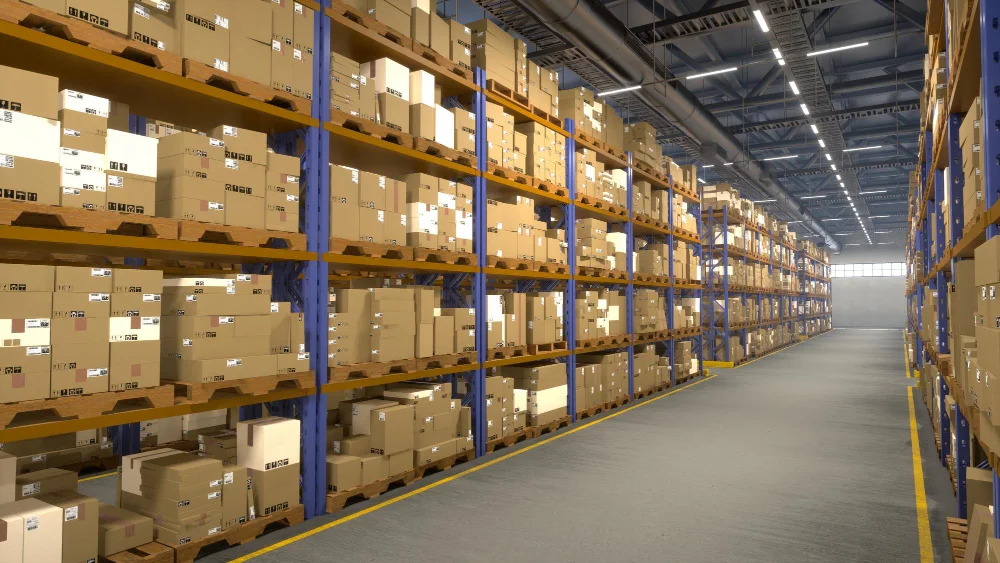
Over time, 85 percent of its operational area gradually shifted into storage, filled with components including bolts, plastic hoses, and rubber belts stacked up to 8 meters high. The sprinkler system was never updated to match this change.
When fire broke out, the system could not handle the intensity generated by the new storage materials because the conditions had moved far beyond its original design parameters.
2. Under-Designed System Capacity
System capacity must be calculated based on fire load density in each zone.
Storage areas containing plastic materials, textiles, or chemicals can have fire load densities exceeding 1,000 MJ per square meter, requiring far greater suppression capacity than a standard office environment.
An under-designed system will show no obvious problems under normal conditions. The failure only becomes visible when fire intensity exceeds design capacity, and at that point, there is nothing left to correct.
3. Suppression Systems Mismatched to Risk Type
Server rooms and electrical panels, for example, can be severely damaged by water from a sprinkler. Areas storing flammable liquids require foam-based systems, not standard sprinklers.
Areas where fires produce toxic smoke need dedicated smoke management systems that differ from those used for general fire suppression.
The problem is that mismatches like these are rarely visible from the outside. The consequences only become clear when fire actually occurs.
4. Poor System Integration
In the BIG Mall Samarinda incident, it was not just the sprinklers that failed. Emergency alarms reportedly did not sound either.
As a result, visitors on the cinema floor above had no awareness of the danger until smoke had already spread.
This case shows that fire protection systems cannot operate in isolation. Smoke detection, alarms, sprinklers, smoke management, and emergency communication must be connected and function as a single integrated system.
If one component fails without triggering the others, the entire response chain collapses and a dangerous situation becomes a disaster.
5. Passive Fire Protection Treated as an Afterthought
Passive fire protection includes fire-rated walls, fire dampers in HVAC ducts, and seals around penetrations where cables or pipes pass through walls and floors.
Because these components do not visibly activate, they are often treated as minor technical details.
In reality, they determine how far fire and smoke can spread before active systems have a chance to respond.
Buildings without adequate compartmentation allow fire and smoke to travel freely through shafts, ducting, and structural gaps.
This is what happened in both the Terra Drone case and the MGM Grand fire, where smoke spread far beyond the point of origin and became the primary cause of casualties.
6. Worst-Case Scenarios Left Out of Design Calculations
Meeting minimum standards is necessary but not sufficient.
What if the materials ignite faster than anticipated? What if fire breaks out in the early hours when the building is empty and no manual response is possible? What if part of the system happens to be offline when the incident occurs?
Scenarios like these rarely make it into standard design calculations. The recommended approach is performance-based fire design, which uses computer modeling and multi-scenario simulation to validate whether the system can genuinely perform under worst-case conditions.
Design Errors by Facility Type
High-Rise Office Buildings
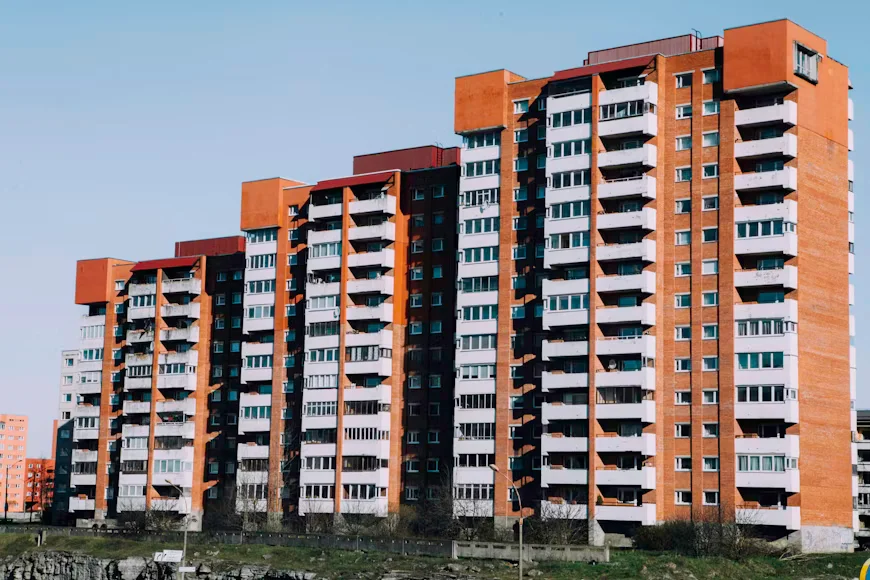
Office buildings housing thousands of occupants often design evacuation routes only for normal conditions, without accounting for situations where corridors are already filled with smoke and visibility is near zero.
This problem compounds when smoke management systems are not connected to evacuation routes, leaving occupants following paths that lead directly into the highest smoke concentration.
High-rise buildings also require phased evacuation protocols that regulate which floors are cleared first to prevent stairwell congestion.
These protocols only work if emergency communication systems remain operational during a main power failure, and if occupants have been trained to understand the procedures.
Mixed-Use Buildings
Buildings combining retail, office, and residential spaces in one structure face distinct risk profiles in each zone, yet all too often receive the same treatment in fire protection design.
The risk that most frequently goes unaddressed is tenant turnover. When a retail unit changes from a clothing store to a restaurant, or from general storage to a chemical supplies outlet, the fire load in that area changes.
If no re-evaluation of the protection system follows, the installed system may no longer reflect actual conditions, and no one finds out until an incident occurs.
High-Occupancy Public Facilities
The BIG Mall Samarinda case showed that when regulatory improvement recommendations are not acted upon in a facility visited by thousands of people daily, the legal and reputational exposure becomes severe.
High-Value Asset Facilities
Data centers, server rooms, and financial facilities cannot use conventional sprinklers. Water can destroy digital assets worth hundreds of billions of rupiah.
Facilities like these require specialized suppression systems using gas or chemical agents that will not damage electronic equipment.
Design Errors by Industry Sector
Commercial Buildings and Public Facilities
As demonstrated by both BIG Mall Samarinda and Terra Drone, the pattern is consistent. Systems were physically installed but did not function when needed.
A system that exists physically but fails to operate in an emergency is just as dangerous as having no system at all.
The root cause is consistently poor inter-system integration and evaluation findings that were never acted upon.
Manufacturing and Production Facilities
The greatest risk arises when changes to production processes or materials are not followed by a protection system re-evaluation.
In the GE case, the shift from fabrication to storage happened gradually over years while the sprinkler system was never updated.
When fire broke out, the system could not cope with fire intensity from materials that had long since exceeded its design parameters.
Oil and Gas and Energy Infrastructure
Environments with potentially explosive atmospheres require ex-proof design and suppression systems selected based on ATEX zone classifications applied area by area.
Using standard systems in these environments introduces serious risk because ordinary electrical equipment can become an ignition source.
Warehouses and High-Value Storage
Fire load density in storage facilities depends heavily on the type of materials stored and the height of stacking.
A system designed for 400 MJ per square meter will not be adequate when actual fire load reaches 1,200 MJ per square meter. System re-evaluation is essential whenever there is a significant change in the type or volume of stored materials.
Cold Storage Facilities
Cold storage facilities face the combined risk of flammable packaging materials alongside hazardous ammonia refrigerants.
A system designed to handle only one of these risks is not enough. Design failures here can result in double losses, physical destruction alongside product contamination worth tens of billions of rupiah.
When Should a Fire Protection System Be Evaluated?
Many building and facility managers only evaluate their fire protection systems during regulatory audits or insurance policy renewals.
In reality, several conditions should trigger an immediate evaluation regardless of the scheduled timeline.
- Any change in room function or layout should prompt a review, because even seemingly minor changes can alter fire load or smoke spread patterns.
- Increases in production capacity or changes in materials used are equally important triggers.
- In commercial buildings, tenant changeovers require evaluation because new tenants bring different activities and materials that the existing system may not account for.
- Renovation or additional construction is both a high-risk period on its own and a common cause of changes to existing compartmentation.
- Finally, whenever an insurer requests updated documentation for policy renewal or claims, a system that is not properly documented carries a real risk of claim denial.
Lumeshield’s Fire Protection System Evaluation service is built to address exactly these needs.
The evaluation covers actual system performance in the field, including pump pressure and flow, hydrant and sprinkler coverage, alarm and detection reliability, and conformance with NFPA, FM Global, and SNI standards.
The output is an accurate picture of the system’s current condition, paired with structured improvement recommendations ready for use in audits and insurance claims.
The Role of a Consultant in Preventing Design Errors
For new facilities or expansion projects, design errors identified during the planning phase cost three to five times less to correct than errors found after construction is complete.
Lumeshield supports this process through fire risk assessment grounded in actual facility conditions, engineering review of system design, gap analysis against international standards, and fire scenario simulation to validate design effectiveness against realistic worst-case scenarios.
For systems already in operation, the same approach is applied through a comprehensive evaluation that produces a prioritized improvement plan.
Tell the Lumeshield team about the current condition of your facility’s fire protection system. Our consultants will help identify gaps that routine inspections miss and recommend corrective actions aligned with your business scale and priorities.