
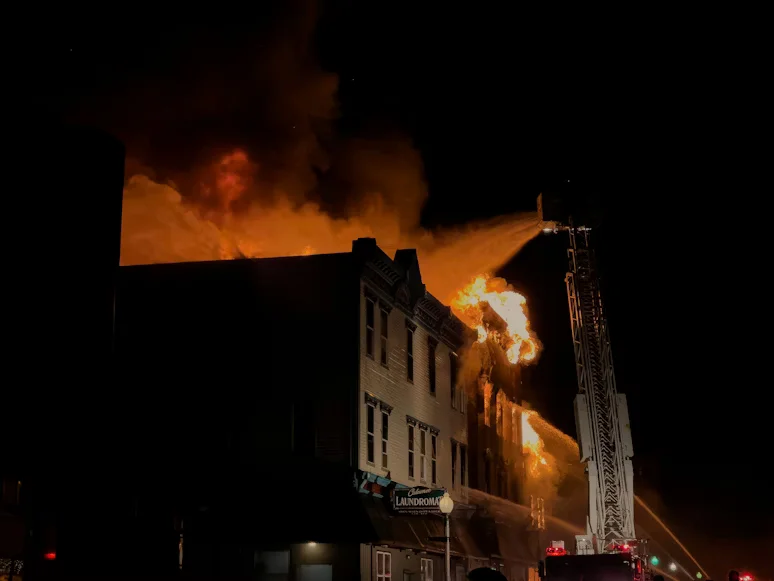
A fire at a chemical storage warehouse in the Cikarang industrial area in 2022 destroyed assets worth tens of billions of rupiah within hours.
Post-incident investigation found that the installed sprinkler system had been designed using ordinary hazard standards, even though the characteristics of the stored materials should have placed them in the extra hazard category.
The system did work, but it simply was not powerful enough to contain the rate of fire spread.
Cases like this are not isolated. Misclassification of fire hazard levels is one of the root causes behind many protection system failures that were already installed before an incident occurred.
Why Fire Hazard Classification Is the Foundation of Protection Systems
Fire protection systems are designed based on specific assumptions about how large and how fast a fire can develop in a facility.
These assumptions are what we call fire hazard classification. If the assumptions are wrong from the start, the entire protection design chain fails with them.
How does this error impact system design?
For instance, the selected pump capacity might be too small to generate the required pressure. Sprinkler discharge density may be inadequate to control the actual type of risk. Or detectors are installed too far apart, allowing fire to spread rapidly before the alarm sounds.
The consequence? A system that looks complete on blueprint, but fails to protect the facility when fire actually occurs.
This is why proper hazard classification determines life safety, operational continuity, asset protection, and in many cases, insurability requirements for industrial properties.
The Difference Between Hazard, Risk, and Fire Load
These three terms are often used interchangeably, yet each carries a distinct meaning.
Hazard refers to conditions or materials that have the potential to become a source of fire, such as liquid fuels, combustible organic dust, or high-pressure gases. Hazard is inherent to the material or process itself.
Risk is the combination of the probability of a fire occurring and the magnitude of its impact. A facility can have a high hazard but low risk if its controls and prevention systems are very strict. Conversely, a moderate hazard can become a high risk if controls are weak.
Fire load is the total energy that would be released if all combustible materials in a room or area were to burn completely. It is expressed in units of MJ/m² and forms the basis for calculating the fire intensity that a protection system must be capable of handling.
Key Factors That Determine Fire Hazard Level
1. Characteristics of Materials and Substances Used
Flash point, burning rate, flame spread ability, and the toxicity of smoke produced all influence classification.
Organic solvent liquids or aviation fuel are clearly in a different category from solid materials with high flash points.
Facilities that store or process aerosols, metal powders, or porous materials that readily absorb fuel require in-depth analysis because their combustion characteristics can be nonlinear.
2. Operational Processes and Energy Sources
Operational processes within a facility can raise the hazard level.
The clearest examples are welding, metal smelting, or open burning, all of which involve direct heat that can act as an ignition source.
The same applies to high-voltage electrical installations, hydraulic systems using synthetic oil, or chemical reactions that generate their own heat during operation.
Beyond the type of process, how a facility operates also affects its risk profile. A plant running continuously for 24 hours has a different risk characteristic than a facility operating in defined shifts with breaks in between. Outside operating hours, supervision decreases, personnel are absent, and if a fire breaks out, no one is there to detect it early.
3. Storage Density and Configuration
High and dense stacking impedes manual response and water penetration from sprinklers. A warehouse with pallet stacking at 8 meters requires a fundamentally different protection system than an area with 2-meter storage.
The height of storage, spacing between racks, and the availability of flue space will determine the vertical fire spread pattern.
A warehouse with 12-meter-high racks storing plastic products in cardboard packaging has far more aggressive fire characteristics than a production area with the same volume of material spread evenly across the floor.
NFPA 13, for instance, separately differentiates protection requirements for shelf storage, palletized storage, and rack storage because each produces a different fire pattern.
4. Building Characteristics and Layout
Ceiling height, construction materials, the presence of concealed voids or plenums, ventilation configuration, and the availability of compartmentation are all contributing factors that influence how quickly fire and smoke can spread.
International Fire Hazard Classification Systems
1. NFPA
NFPA, primarily through NFPA 13 for sprinkler systems, classifies occupancies into three main categories based on occupancy hazard.
- Light hazard covers facilities such as offices, schools, and places of worship with minimal combustible materials.
- Ordinary hazard is divided into two groups and covers most commercial and light industrial facilities.
- Extra hazard, also split into two groups, is intended for facilities with highly flammable materials or processes.
This classification determines the required water discharge density and the design area of sprinkler operation.
2. FM Global
FM Global uses a property loss prevention-oriented approach. The FM Global Data Sheets standards, primarily DS 8-1 and DS 8-9, provide detailed guidance for various types of industries.
The FM Global approach is highly relevant for facilities insured by insurance companies that require FM standards.
3. ISO and SNI
ISO 31000 provides a risk management framework applicable in fire risk contexts, while ISO/TR 13387 more specifically addresses fire safety engineering.
In Indonesia, BSN has published a number of SNI standards related to fire protection, including SNI 03-3989 which adopts sprinkler design principles, along with various derived SNIs that serve as mandatory references in the building permit process.
Fire Hazard Classification by Facility Type
1. Multi-Story Buildings and Public Facilities
Office buildings, malls, and hotels each have distinct characteristics. Modern office buildings with HVAC systems require sensitive detection in concealed areas. Malls with high occupancy require rapid evacuation and integrated communication systems.
Consider the case of PT Surya Tata Metal Jakarta, a 12-story office building that initially used a generic protection system with sprinkler coverage of 30 m² per head.
After a fire risk assessment was conducted, it was found that floors 4 through 6 housing backup server installations required tighter coverage of 15 m² per head and a gas suppression system in dedicated rooms.
This revision increased the initial cost by 15 percent, but reduced the potential loss from an estimated Rp 8 billion to Rp 2 billion in a worst-case fire scenario.
2. Manufacturing and Production Facilities
This is the category with the greatest hazard variability.
Textile factories, rubber processing plants, painting facilities, and wood industries fall under extra hazard group 1 or group 2 due to the combination of combustible materials and processes that generate heat or sparks.
According to NFPA data, fires in manufacturing facilities account for approximately 9.4% of total property losses from fires in the commercial and industrial sector globally.
3. Oil and Gas and Energy Infrastructure
Facilities in this sector require a different classification approach because they involve explosion risks in addition to fire risks.
Hazardous area classification follows IEC 60079 and API RP 505 standards, which categorize zones based on the likelihood of an explosive atmosphere being present.
Selected protection systems must match the hazardous zone, ranging from intrinsically safe equipment to suppression systems based on inert gas or foam.
4. Warehouses and High-Value Storage
Hazard classification in warehouses depends on what is stored and how it is stored. A warehouse storing electronics in cardboard packaging on 8-meter racks requires far more intensive protection than a warehouse holding heavy, non-combustible materials.
5. Cold Storage and Pharmaceutical Facilities
Cold storage facilities typically use polyurethane insulation panels, which have a very high burning rate and produce toxic smoke.
Several major incidents at cold storage facilities using PU panels without adequate protection have become the basis for developing specific protection standards in many countries.
Pharmaceutical facilities, on the other hand, often use organic solvents in significant quantities and store extremely high-value materials. Given this, hazard classification must simultaneously cover both life safety and property protection aspects.
The Role of Fire Protection Consultants in Hazard Classification
Determining fire hazard classification requires field surveys, review of material data used in the facility, layout analysis, and fire scenario modeling to validate design assumptions. The output serves as the engineering foundation that drives every subsequent protection design decision.
Many facilities are also unaware that changes in room function, increases in production capacity, or changes in the type of materials stored should be followed by a review of the hazard classification. Without this review, protection gaps remain invisible until an incident actually occurs.
Unfortunately, some management teams still view this classification process as a mere licensing formality. Yet every component of a protection system, from the pump, nozzles, to the control panel, is designed to operate under specific conditions.
If your facility has never undergone a comprehensive hazard evaluation, or if there have been changes in function, capacity, or material type since the protection system was last installed, there is a real possibility that the current system no longer matches the actual risk on the ground.
The Lumeshield team is ready to help you find that gap before it becomes a problem.
Through our Fire Risk Assessment service, Lumeshield conducts a comprehensive evaluation covering fire load calculation, hazard source analysis, fire scenario modeling, and assessment of installed protection systems, all based on NFPA methodology.
You will receive a clear picture of your risk profile along with prioritized action recommendations.
📞 Contact the Lumeshield team today to start the consultation!