
In December 2025, the President Director of PT Terra Drone Indonesia was officially named a suspect following a fire at his building.
This legal status was not imposed because he started the fire, but because the building under his management was proven to lack adequate safety systems at the time of the incident.
The fire is known to have started in a drone battery storage area on the first floor of a seven-story building in the Kemayoran area of Jakarta.
The most devastating fact about this incident was what actually killed people. They were caused by carbon monoxide exposure.
Toxic smoke filled the entire building due to the absence of a functioning smoke management system. At the same time, the evacuation routes were too narrow to evacuate all occupants in time.
This case is concrete proof that fire safety compliance cannot remain a mere administrative formality.
For directors, property managers, and building developers, this incident underscores the urgency of implementing proper engineering strategies.
Failures in designing fire compartmentation, smoke management, and evacuation routes do not just destroy asset value, they carry criminal consequences.
This article breaks down engineering strategies in high-rise building fire protection to ensure life safety while preserving operational continuity.
Why Do High-Rise Buildings Carry More Complex Fire Risks?
1. Challenging Vertical Evacuation
Unlike evacuating a horizontal structure, evacuating a high-rise building places both physical and psychological strain on occupants.
Descending dozens of flights of emergency stairs in conditions of panic, smoke, and darkness is vastly different from exiting through a standard emergency door.
As noted by pbfpe.com, occupants typically need at least two cues before initiating evacuation.
For example, smelling smoke and hearing a fire alarm at the same time. When only one cue is present, occupants tend to ignore it, worsening evacuation delays.
In a situation like Terra Drone, a delay of just a few minutes can mean the difference between life and death.
2. High Occupancy Density
Office buildings, apartments, and mixed-use buildings in city centers accommodate hundreds to thousands of people within a single structure.
This density raises the potential for greater casualties if protection fails, while simultaneously complicating organized evacuation procedures.
3. Fire Spread Through Shafts and Facades
One of the most dangerous threats in high-rise buildings is the rapid vertical spread of fire and smoke.
Emergency stairwells, elevators, and utility shafts can channel hot gases and toxic smoke throughout every floor of a building, exactly what happened at Terra Drone, where the majority of victims were found not at the fire’s origin point, but on the third and fourth floors.
4. Complex Mechanical and Electrical Systems
Modern high-rise buildings include high-voltage electrical networks, large-scale HVAC systems, gas installations, server rooms, and other infrastructure, each with its own ignition potential.
This complexity demands a protection approach that cannot be standardized, but must be tailored to the risk profile of each zone within the building.
5. Significant Financial and Reputational Impact
A fire in a commercial high-rise does not stop at physical damage. The consequences include:
- Legal liability. Law No. 28 of 2002 on Buildings and occupational health and safety regulations provides the legal basis for both criminal and civil accountability against managers proven to be negligent. The Terra Drone case demonstrates that suspect designation can reach directly to the director level.
- Risk of rejected insurance claims. If an insurer’s investigation finds that the protection systems in place did not match what was declared during underwriting, the claim can be denied on grounds of material non-disclosure. For buildings valued at more than Rp 50 billion, losses must be absorbed by the building manager.
- Downtime and tenant loss. Losses that frequently exceed the cost of physical repairs include the absence of hundreds of employees during recovery, tenants breaking lease agreements, and lasting damage to the building’s reputation.
- Rising insurance premiums. Large claims are often followed by premium increases the following year and, in some cases, by coverage restrictions if the building’s risk grade is deemed poor by the insurer.
Core Principles of Fire Protection Engineering in High-Rise Buildings
1. Prevention
Fire prevention must begin at the earliest design stage.
This encompasses selecting building materials with adequate fire-resistance ratings, planning room layouts to minimize the accumulation of combustible materials, and managing potential ignition sources.
2. Detection
An effective early detection system provides critical time for occupants to evacuate and for suppression systems to engage before a fire spreads.
In a high-rise, the detection system must accurately identify the fire’s location across hundreds of monitoring zones.
3. Suppression
Automatic suppression must be capable of operating independently, without relying on manual response, in the early minutes of a fire, when the potential to control it is greatest.
The primary objective of these systems is to automatically suppress the fire before the fire department arrives on scene.
4. Containment
Compartmentation, which limits the spread of fire to a smaller area, is a passive strategy that is equally important as active systems.
By confining fire within a defined zone, containment systems buy more time for evacuation and response.
5. Safe Evacuation
All four principles converge on a single goal: ensuring every occupant can exit the building safely.
This encompasses the design of evacuation routes, emergency lighting systems, effective mass communication, and well-practiced phased evacuation procedures.
Core Fire Protection Systems for High-Rise Buildings
1. Automatic Fire Detection System
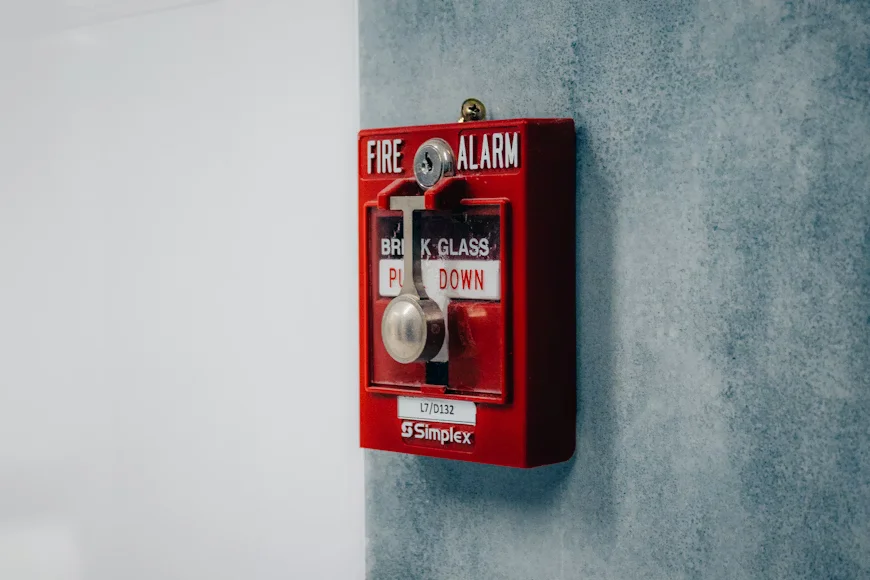
Modern fire detection systems in high-rise buildings comprise a network of smoke detectors, heat detectors, gas detectors, and beam detectors, all connected to a central control hub, the Fire Alarm Control Panel (FACP).
What makes this system effective is its ability to pinpoint the exact location of an incident. When an alarm activates, the system indicates that a fire exists and immediately identifies the triggered zone and the specific device.
Detector placement is not arbitrary. Each zone has different requirements depending on its occupancy type and hazard potential.
A server room, for instance, requires more sensitive detectors than a lobby or parking area, because the nature of the threat and the consequences of damage differ significantly.
2. Automatic Suppression System
Sprinklers do not activate simultaneously throughout an entire building.
They are positioned in deliberate patterns to ensure optimal water coverage at every point, and only the sprinkler heads nearest the heat source will activate, meaning the system is intelligent enough to respond without flooding an entire floor.
However, sprinklers are not the only option, because not every area can be suppressed with water.
Server rooms and electrical panels, for example, can sustain severe damage if exposed to water. Gas suppression systems, such as FM-200, CO2, or Novec 1230, work without leaving residue that damages electronic equipment.
Foam systems better serve areas storing flammable liquids. Additionally, a hydrant system with a standpipe network remains available on every floor as a backup for manual suppression by fire crews.
None of these components is chosen arbitrarily.
Before determining the type of pump, the volume of suppression media, or the overall system capacity, engineers must first classify the building’s occupancy hazard level, from Light Hazard for low-risk areas to Extra Hazard for zones with the highest fire potential.
This classification is the primary reference for every design decision.
3. Smoke Control System
The Terra Drone case proved that smoke is deadlier than fire. Smoke control systems operate through three mechanisms:
- Pressurization Systems apply positive pressure to emergency stairwells and elevator shafts to prevent smoke from entering evacuation routes.
- Exhaust Systems extract smoke from the fire zone and expel it outside the building, maintaining visibility and air quality in evacuation areas.
- Makeup Air Systems supply fresh air to areas that need it, replacing the smoke extracted.
The entire system is automatically controlled through a Building Management System (BMS) integrated with the fire alarm system.
4. Fire Compartmentation and Passive Fire Protection
Passive fire protection (PFP) plays an equally important role as active systems like sprinklers and alarms. Its principle is to slow the spread of fire and smoke for as long as possible, giving occupants sufficient time to evacuate.
Fire-rated walls and partitions, for example, are designed to withstand direct fire exposure for one, two, or more hours, depending on the requirements of the zone. During that time, the fire is confined to a single compartment and cannot spread to other areas.
However, buildings are full of gaps. HVAC ducts, electrical cables, and water pipes penetrate walls and floors from one side to the other. Without specific treatment, these penetrations become the easiest pathways for smoke and fire to travel.
This is why fire dampers are installed within HVAC ducting to shut off airflow when smoke is detected automatically, and firestopping compounds fill and seal every cable and pipe penetration so no open pathways remain.
In areas requiring visibility, fire-rated glazing provides thermal protection without fully obstructing the line of sight.
5. Evacuation System and Life Safety Infrastructure
When a fire alarm sounds, all the detection and suppression systems that have been carefully designed only matter if occupants actually make it out safely.
This is why evacuation infrastructure forms the final layer of the entire fire protection chain.
The most fundamental element is the emergency stairwell, not simply present, but designed to remain fully usable when hundreds of people move through it simultaneously under panic conditions.
As cited on pbfpe.com, there are four key considerations for optimizing emergency stairwell design: easy accessibility, adequate capacity, protection from smoke and fire, and clear identification.
Beyond stairwells, modern evacuation systems also include:
- Voice Evacuation Systems (VES) for structured evacuation guidance and crowd panic reduction
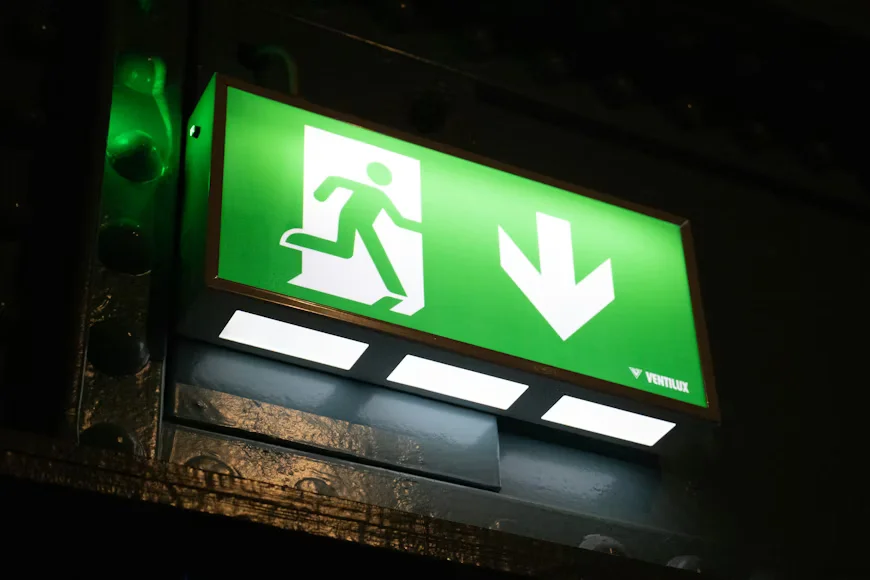
- Emergency lighting and exit signs that operate independently when the main power supply is cut
- Refuge areas as temporary safe zones for occupants with limited mobility
- Firefighting lifts operated exclusively for fire department use.
Fire Protection Design Based on Building Risk Profile
1. High-Rise Office Buildings
High-rise office buildings are defined as structures with occupied floors above 75 feet (approximately 23 meters) from ground level, per NFPA 101 and the International Building Code.
Their risk characteristics are relatively predictable: combustible load is fairly consistent, occupancy patterns follow regular working hours, and most occupants are healthy adults.
A fire protection strategy for office buildings emphasizes sensitive early detection, well-trained evacuation systems, and integration with building security.
A phased evacuation, where the affected floor and the floors immediately above and below are evacuated first, is the standard approach for minimizing stairwell congestion.
2. Mixed-Use Buildings
Mixed-use buildings are considerably more complex, combining multiple functions with different risk profiles, retail on lower floors, offices in the middle, and residential units above. Each zone must be designed with protection systems suited to its specific characteristics and occupancy, while still integrating into a single centralized management system.
3. High-Occupancy Public Facilities
Hotels, shopping centers, and other public facilities have high occupant turnover, meaning most people inside are unfamiliar with the building layout and evacuation procedures.
This demands intuitive voice evacuation systems, exceptionally clear evacuation signage, and procedures legible even to first-time visitors.
4. High-Value Asset Buildings
Data centers, museum facilities, and financial institutions require protection that prioritizes both digital and physical asset safety.
Critical components in this category include gas suppression systems that do not damage electronic equipment, precision-based fire suppression, and 24/7 monitoring systems.
Modern Approaches in High-Rise Fire Protection
1. Performance-Based Fire Design
The conventional approach to fire protection relies on prescriptive codes meeting the minimum requirements established by regulation.
The modern approach increasingly adopted is performance-based fire design, where systems are engineered based on quantitative analyses of fire scenarios specific to that building.
This method produces solutions that are cost-efficient and technically more effective, because they go beyond meeting minimum standards to address the building’s real-world conditions.
2. Fire Modeling and Simulation
Before a single physical system is installed, modern fire protection engineers use simulation software such as Fire Dynamics Simulator (FDS) to model fire scenarios virtually. These simulations generate data on smoke spread rates, heat distribution, and the Available Safe Egress Time (ASET) compared to the Required Safe Egress Time (RSET).
3. Integrated Building Safety System
Modern fire protection systems are fully integrated with the Building Management System (BMS), physical security systems such as CCTV and access control, and emergency communication systems.
This integration enables rapid response, better coordination, and full monitoring of building conditions within a single unified platform.
4. Risk-Based Protection Level
Not every area in a building requires the same level of protection. A risk-based approach, therefore, allocates protection resources based on each zone’s risk level. Server rooms receive premium protection, while lower-risk areas receive standard systems.
The Role of a Fire Protection Consultant in High-Rise Projects

Following the Terra Drone incident, the Governor of DKI Jakarta announced plans to issue a Governor’s Regulation to enforce building compliance.
At the time, only 10 of 3,500 buildings in the capital had been inspected, suggesting that audit and inspection activity is likely to intensify significantly over the next 6 to 12 months.
The question is: will your building management team take mitigation steps before an audit, or react only after safety gaps are discovered?
The Lumeshield team, with 10+ years of experience and certifications from BNSP and LPJK, as well as FM Global training in Kuala Lumpur, is ready to support building managers, developers, and HSE teams at every stage of fire protection through four integrated services:
✔️ Fire Risk Assessment
✔️ Fire Protection System Design
✔️ Fire Protection System Evaluation
✔️ EPC Support for on-site installation supervision
The results can be used directly to satisfy property insurance requirements, support regulatory audit readiness, and serve as the technical foundation for design decisions and protection system upgrades in your building.
Tell the Lumeshield team about your facility’s current condition. We will recommend the right solution and submit a proposal with a clear scope of work and cost estimate.
📞 Contact the Lumeshield Team to Start a Consultation Session