

In building fire protection systems, the function of a fire pump is often only recognized when the system fails during an emergency. In fact, fire suppression systems such as hydrants and sprinklers cannot operate as designed without adequate water pressure and flow rate.
Since every building has different risk characteristics, capacity requirements, and water supply conditions, fire pump selection cannot be standardized. Understanding the specific function of each fire pump type is a critical step in developing a fire pump system design that is both reliable and compliant with applicable standards.
What Is A Fire Pump?
A fire pump is a dedicated pump used to increase water pressure and flow in fire suppression systems such as hydrant and sprinkler systems.
A fire pump operates when the pressure from the primary water source (municipal supply, reservoir, or storage tank) is insufficient to meet system demand during a fire event.
Fire pumps are typically activated automatically when system pressure drops below a predetermined threshold. Because of their critical role, standards such as NFPA 20 and SNI 6570:2023 strictly regulate their specifications, capacity, and installation methods.
Incorrect selection or improper placement of a fire pump can cause the fire protection system to fail in meeting the building’s fire safety requirements.
5 Types of Fire Pump
1. Horizontal Split Case Pump

The horizontal split case pump is the most commonly used fire pump for large-capacity fire protection systems that require high reliability.
Its main characteristic is a casing split horizontally, allowing internal maintenance without dismantling the inlet and outlet piping.
Functions of a horizontal split case fire pump:
- Delivers high flow rates for high-rise buildings, industrial facilities, and large hydrant networks
- Provides stable performance for long-term operation
- Suitable for systems requiring high performance and maximum reliability
Horizontal split case pumps require more installation space than other types. Therefore, this fire pump type is best suited for high-rise buildings, industrial areas, logistics facilities, and fire hydrant systems with extensive piping networks..
2. Vertical Split Case Pump
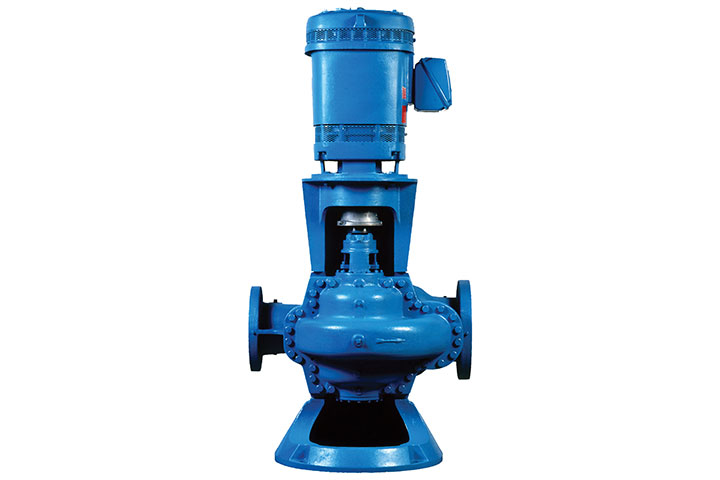
The vertical split case pump operates on the same principle as the horizontal type but with a vertical shaft orientation. This pump is often selected when floor space is limited, while high flow rate and pressure are still required.
Functions of a vertical split case fire pump:
- An alternative to split case pumps for installations with limited floor space
- Maintains high performance with a smaller footprintil
Its main limitation is that maintenance access is slightly more complex compared to the horizontal type. Vertical split case pumps are widely used in high-rise buildings and facilities where space constraints are a primary consideration but system capacity must remain high.
3. Vertical Inline Pump

The vertical inline pump features a compact design with the inlet and outlet aligned on the same pipeline axis. This type has limitations in both capacity and pressure, making it unsuitable for high-hazard systems or extensive hydrant networks.
Functions of a vertical inline fire pump:
- Provides additional pressure for sprinkler or hydrant systems without requiring a large pump room
- Enables easier installation and space-saving layouts
Vertical inline pumps are suitable for sprinkler or hydrant systems with moderate pressure requirements. Facilities that commonly use this type include low-rise office buildings, small hotels, and commercial buildings with moderate fire risk.
4. Vertical Turbine Pump

The vertical turbine pump is specifically designed for facilities where the water source is located far below ground level, such as deep wells, rivers, or underground reservoirs.
This pump operates using a multi-stage configuration capable of lifting water from significant depths. As a result, its installation requires thorough design planning, including calculations for water depth, cavitation protection, and maintenance access.
Functions of a vertical turbine fire pump:
- Lifts water from deep or remote water sources
- Commonly used in industrial facilities, power plants, and remote areas
- Serves as a solution when surface-level water tanks are not feasible
Vertical turbine pumps are widely applied in large industrial facilities, power plants, and locations with limited water infrastructure.
5. End Suction Pump

The end suction pump is a centrifugal pump with the simplest and most economical design. It is typically used for applications requiring relatively low flow rates and pressure, or as part of auxiliary fire protection systems.
Functions of an end suction fire pump:
- Provides a practical pumping solution for small buildings or limited hydrant systems
- Offers advantages in ease of installation and maintenance
However, these benefits come with performance limitations when compared to split case pump types, making end suction pumps less suitable for large or high-demand fire protection systems.
Best Location for Fire Pump Installation
The location of a fire pump is a critical factor that directly affects the reliability of a fire protection system. According to NFPA 20 and the International Building Code (IBC), the following criteria define the ideal place to install a fire pump:
1. Dedicated and Fire-Resistant Pump Room
A fire pump should be installed in a dedicated pump room that is separated from high-risk areas. This room must be constructed with fire-rated materials to prevent the pump from being directly exposed to fire in other parts of the building.
The purpose of using a dedicated room is to ensure that the fire pump can continue operating during a fire, rather than being affected by heat, smoke, or structural collapse. In many fire safety audits, pump rooms without proper separation or fire protection are classified as major findings.
2. Protected from Flooding and Water Ingress
Fire pumps must not be installed in areas prone to flooding, standing water, or seepage. Although the pump handles water, key components such as the motor, control panel, and electrical systems are highly vulnerable to water damage.
Standards require pump rooms to have proper drainage systems and safe floor elevation. Many fire pump failures during emergencies are caused by flooded pump rooms, particularly in basement installations without adequate drainage design.
3. Located Close to a Reliable Water Source
Ideally, the fire pump should be located as close as possible to the main water source, such as a fire water tank, reservoir, or well. This helps minimize pressure loss (head loss) on the suction side of the pump.
Long suction pipelines or sharp bends can significantly reduce pump performance and increase the risk of cavitation. Therefore, the fire pump location must be carefully planned together with the water source layout during the early stage of fire protection system design.
4. Easy Access for Inspection and Maintenance
The fire pump must be installed in a location that is easily accessible for operation and maintenance teams, allowing for routine inspections, weekly testing, and emergency repairs. Easy access also supports firefighting personnel in the event of an actual fire.
Standards require sufficient clearance around the pump to allow component removal and technical work. Pump rooms that are cramped or difficult to access often lead to neglected maintenance, which ultimately results in system failure when it is most needed.
5. Adequate Ventilation and Environmental Conditions
The fire pump room must be equipped with proper ventilation to keep the motor and pump temperature within safe operating limits. Excessive heat can reduce efficiency and accelerate component wear.
In addition, the pump room environment should be free from excessive dust, corrosive substances, and extreme humidity. Poor environmental conditions will shorten the service life of the fire pump and significantly increase the risk of operational failure.
Why Must Fire Pump Selection Be Design-Based?
Each type of fire pump has a specific function, limitation, and intended application. Selecting a pump based solely on price or availability can lead to insufficient water pressure, system failure during commissioning tests, or major findings during fire safety audits and insurance evaluations.
Through our Fire Protection System Design service, Lumeshield assists facility managers in selecting the appropriate fire pump based on building risk classification, actual flow and pressure demand, applicable SNI and NFPA standards, and proper integration with the overall fire protection system.
Make sure the fire pump in your building is not only installed, but also technically reliable and fully compliant with fire protection standards. Contact us today to start your consultation!