
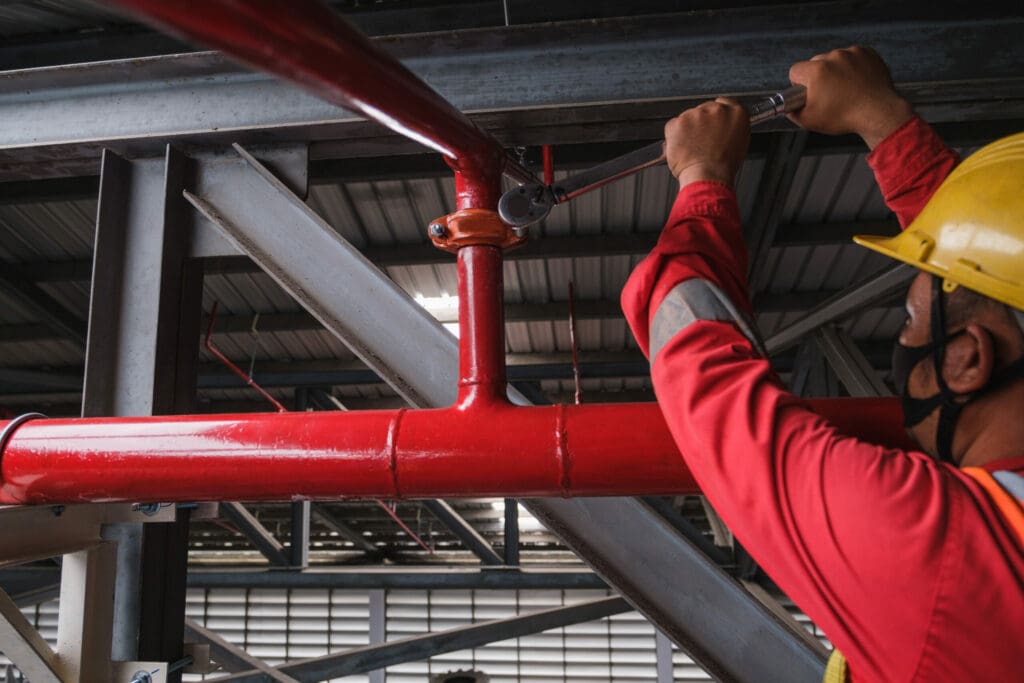
In building fire protection systems, attention is often focused on active systems such as sprinklers, hydrants, and fire alarms. However, passive fire protection (PFP) plays a decisive role in controlling how quickly fire and smoke spread before active systems are fully effective.
This is why a Passive Fire Protection Assessment is a fundamental element of fire risk management for buildings and industrial facilities. When passive fire protection measures are incomplete or non-compliant, fire can spread rapidly between compartments, reduce available evacuation time, overload active fire protection systems, and significantly increase the potential for structural damage.
What Is Passive Fire Protection for Building Safety?
Passive fire protection consists of building elements designed to resist, contain, and slow the spread of fire and smoke without the need for mechanical or electrical activation.
The primary objective of passive fire protection is to maintain compartment integrity, enable safe evacuation, and prevent fire escalation to other areas.
Why Passive Fire Protection Needs Assessment?
A Passive Fire Protection Assessment is required to ensure that each passive element can still perform its intended function of containing fire and smoke in accordance with the original fire safety design. In many facilities, passive fire protection performance degrades over time due to factors such as:
- Renovations and the addition of new utilities,
- Layout changes without proper reinstatement of fire stopping,
- Installation of doors or openings that do not meet the required fire rating, and
- Material deterioration caused by age and environmental exposure.
Without a Passive Fire Protection Assessment, passive systems may appear to be in place but no longer function as designed or comply with applicable standards. This condition can lead to major findings during fire safety or insurance audits.
Scope of Passive Fire Protection Assessment
1. Fire Compartmentation
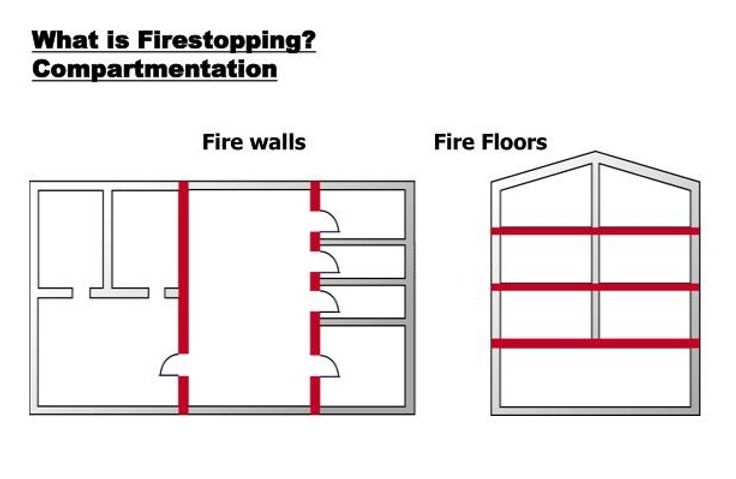
The assessment evaluates the integrity and continuity of fire-separating elements, including fire-resisting walls and floors, partitions between rooms and fire zones, as well as joints and sealants between building elements.
The objective is to ensure that each compartment can still contain fire and smoke for the required fire resistance rating, preventing fire spread to other areas before evacuation and firefighting activities take place.
2. Fire-Stopping Assessment
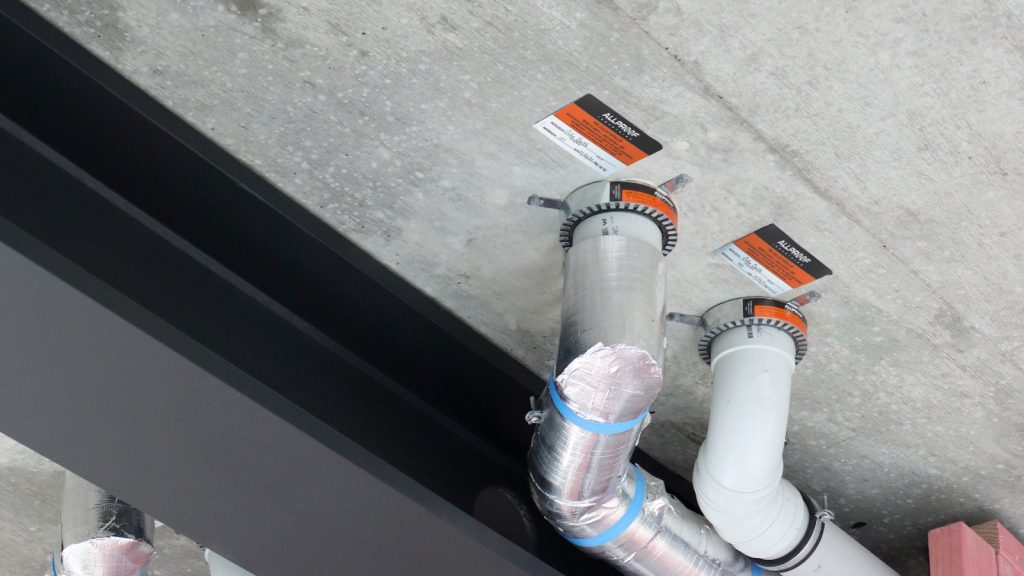
Fire-stopping deficiencies are among the most common findings during fire safety audits. The assessment covers:
- Cable, pipe, and duct penetrations through fire-resisting walls or floors,
- The type of fire-stopping materials used, and
- Installation methods and actual site conditions.
Inadequate or damaged fire-stopping can become a rapid pathway for fire and smoke spread, even when walls or floors have high fire resistance ratings.
3. Fire-Rated Door Evaluation
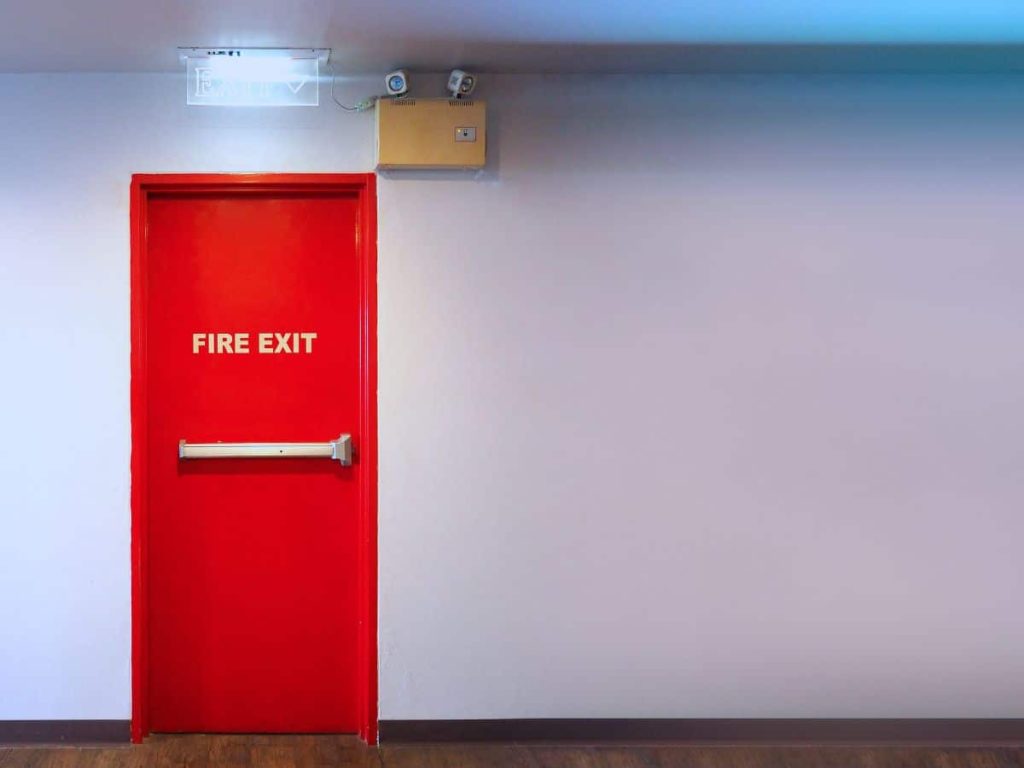
Fire-rated doors are a critical component of passive fire protection, as they act as barriers along escape routes and between compartments. The assessment includes:
- Verification of door fire ratings against room function and fire strategy,
- Condition of door leaves, frames, and hinges,
- Functionality of self-closing devices and latching mechanisms, and
- Gaps around doors that may allow smoke leakage.
Fire-rated doors that fail to self-close or suffer mechanical damage lose their protective function, even if they are certified.
4. Structural Fire Protection
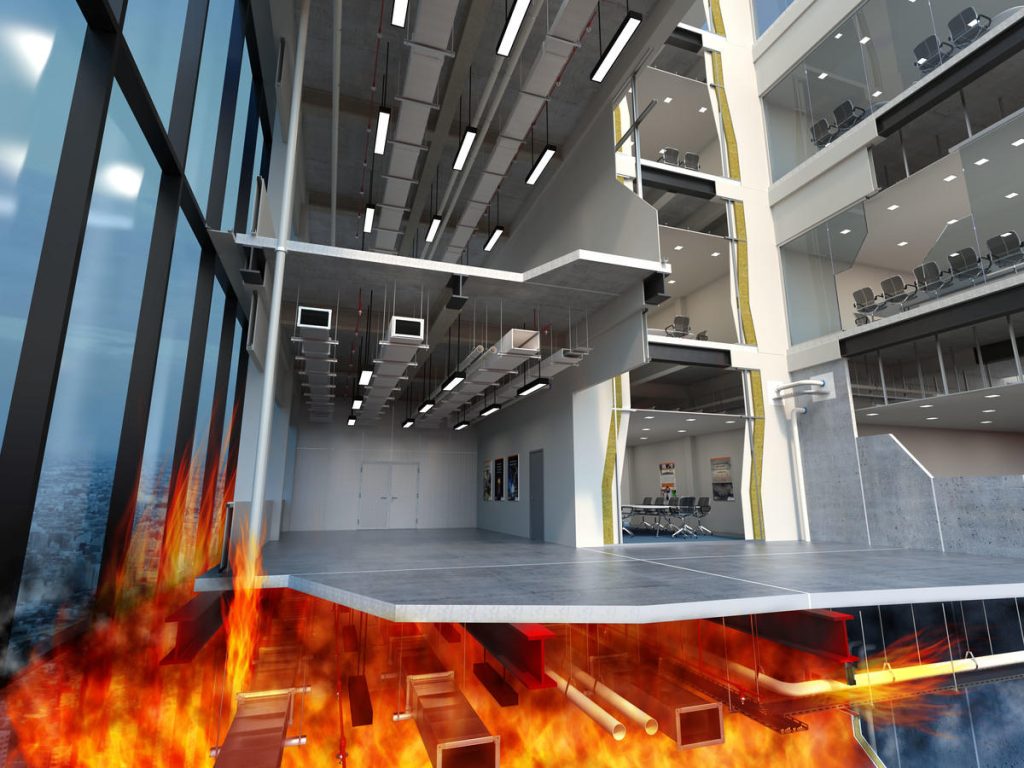
The assessment also covers passively protected structural elements, such as fireproofing applied to steel members, thickness and condition of protective materials, and areas where structural protection has been compromised due to renovations or damage.
The objective is to ensure that the building structure remains stable during a fire and does not experience premature failure.
Standards for Passive Fire Protection Evaluation
1. NFPA 101 – Life Safety Code
NFPA 101 serves as a primary reference for evaluating how passive fire protection measures safeguard life safety. This standard governs:
- Fire zoning and compartmentation,
- Fire and smoke resistance of separating elements,
- Protection of means of egress, and
- Requirements for fire-rated doors and openings.
2. NFPA 221 – Fire Walls, Fire Barriers, dan Fire Partitions
NFPA 221 provides technical guidance on fire-resisting wall types, structural fire resistance requirements, and the continuity and detailing of joints and interfaces.
This standard is essential for assessing whether fire-resisting walls and floors can effectively contain fire spread for the required fire resistance duration, including at joints and intersections between building elements.
Assessment Process by Professional Consultants

The role of a consultant goes beyond identifying non-conformances; it involves translating actual site conditions into a sound basis for fire safety and design decisions. The following are the typical stages of a Passive Fire Protection Assessment.
1. Site walkthrough & visual inspection
The assessment begins with a comprehensive site walkthrough and visual inspection across all facility areas. Consultants review the actual condition of passive fire protection elements, including operational areas, utility spaces, means of egress, and concealed spaces that are often overlooked during routine inspections.
At this stage, the assessment focuses on:
- Integrity of fire-resisting walls and floors,
- Condition of fire stopping at cable, pipe, and duct penetrations,
- Physical condition and functionality of fire-rated doors, and
- Indications of building modifications due to renovations or added utilities.
The objective is to obtain an accurate representation of the passive fire protection system based on real conditions, rather than relying solely on documentation or design assumptions.
2. Gap Identification Against Design and Standards
Once actual conditions are mapped, the consultant performs a gap analysis by comparing site findings against the original design intent and as-built drawings, applicable safety standards (SNI, NFPA, ASTM, UL), and regulatory and insurance requirements.
During this stage, the consultant evaluates whether each passive fire protection element still meets the fire safety design intent, has experienced performance degradation, or has become non-compliant due to changes in space usage.
Identifying these gaps is critical to determining the severity of non-conformance and its potential impact on fire and smoke spread.
3. Documentation of Findings & Risk Levels
All assessment findings are systematically documented in a technical report. This documentation includes the exact location of each non-conformance, the nature and characteristics of the finding, references to the violated standards, and an evaluation of fire risk level (low, medium, high).
In addition, the consultant establishes corrective action priorities based on risk level and life safety impact. This structured approach supports facility management in making informed decisions—whether for immediate corrective actions, redesign planning, or audit readiness.
Need a Consultant to Evaluate Passive Fire Protection in Your Building?
The evaluation of passive fire protection is a critical component of a comprehensive Fire Risk Assessment (FRA). Without an FRA, non-compliances in fire-rated walls, fire stopping, or fire-rated doors are often only identified during audits or after an incident occurs.
Through Lumeshield’s Fire Risk Assessment services, we assess the reliability of passive fire protection as part of the overall fire protection system—covering building conditions, potential fire and smoke spread, and the adequacy of existing protections against the facility’s actual risk profile. The FRA results provide a clear technical basis for corrective actions, system redesign, and readiness for safety and insurance audits.
Stay prepared for worst-case fire scenarios by strengthening your passive fire protection systems. Ensure that fire-resisting walls, fire stopping, and fire-rated doors in your facility are performing as intended. Contact us to start your consultation.