
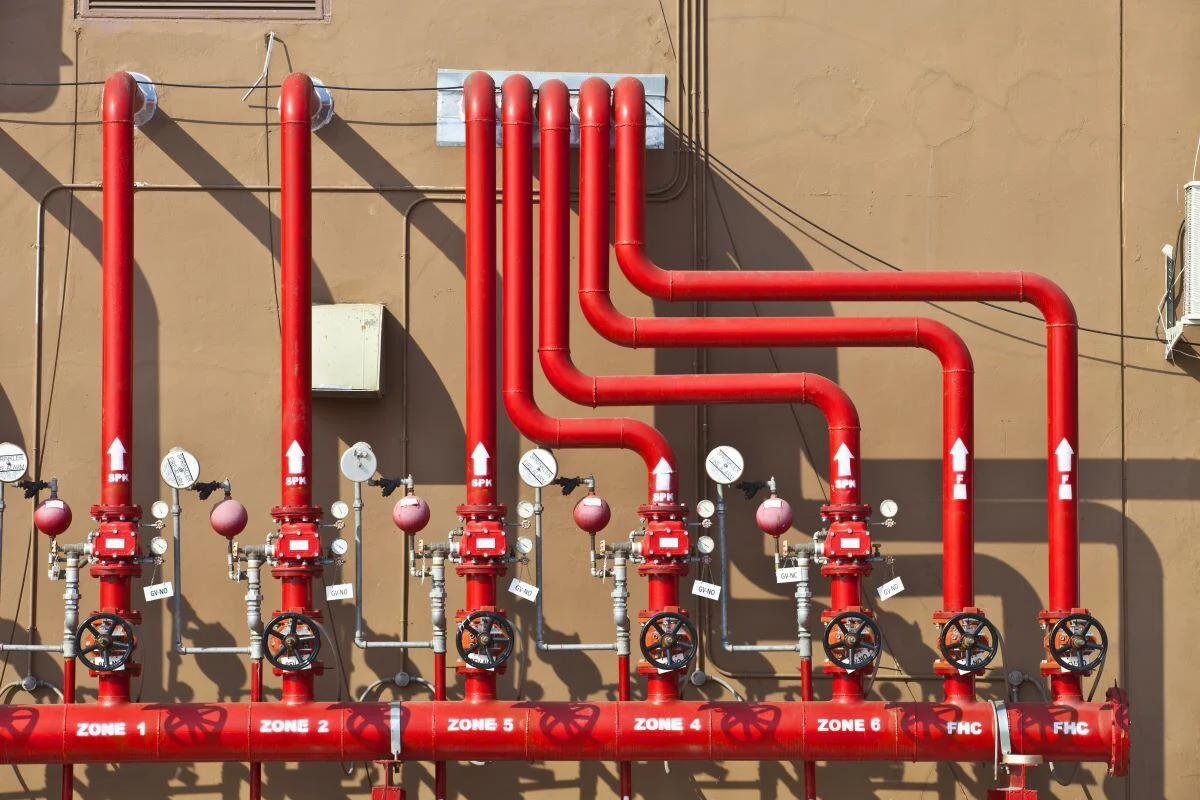
Designing an industrial sprinkler system in accordance with NFPA 13 is not merely about regulatory compliance—it is about ensuring the system performs reliably when a fire actually occurs. Even minor design errors can result in system failure and lead to rejected insurance claims.
For this reason, facility owners and managers must understand the technical aspects of sprinkler system design from the earliest stages of planning. This article outlines the design process and the critical components that must be considered to achieve a compliant and effective industrial sprinkler system.
Why Is Sprinkler System Design Critical for Industrial Buildings?
Sprinkler system design is crucial for industrial buildings because it enables early fire detection and automatic fire suppression. In industrial environments such as factories and warehouses that store combustible materials, a properly designed sprinkler system plays a vital role in preventing a fire from spreading beyond the point of origin.
The sprinkler system must be engineered to deliver water effectively and uniformly, without causing unnecessary flooding to surrounding areas. For businesses, a well-designed sprinkler system helps protect lives, minimize financial losses, and ensure compliance with occupational safety and fire protection standards.
How a Sprinkler System Works and Its Key Components
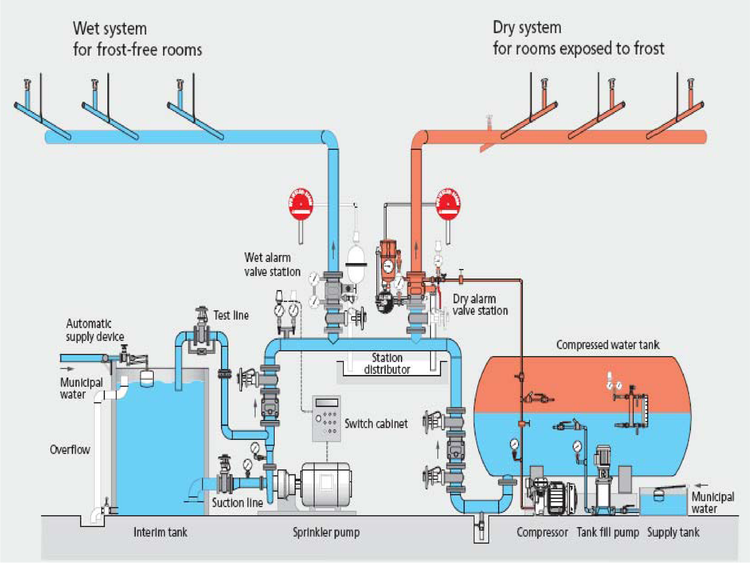
A sprinkler system operates automatically to suppress a fire by detecting elevated heat, activating the sprinkler’s heat-sensitive element, and discharging water at a designed pressure directly onto the fire area.
Only the sprinkler heads closest to the fire are activated, preventing unnecessary water discharge throughout the entire building. This fast and efficient response helps protect lives and assets in industrial facilities. Below are the key components that determine the overall effectiveness of a sprinkler system.
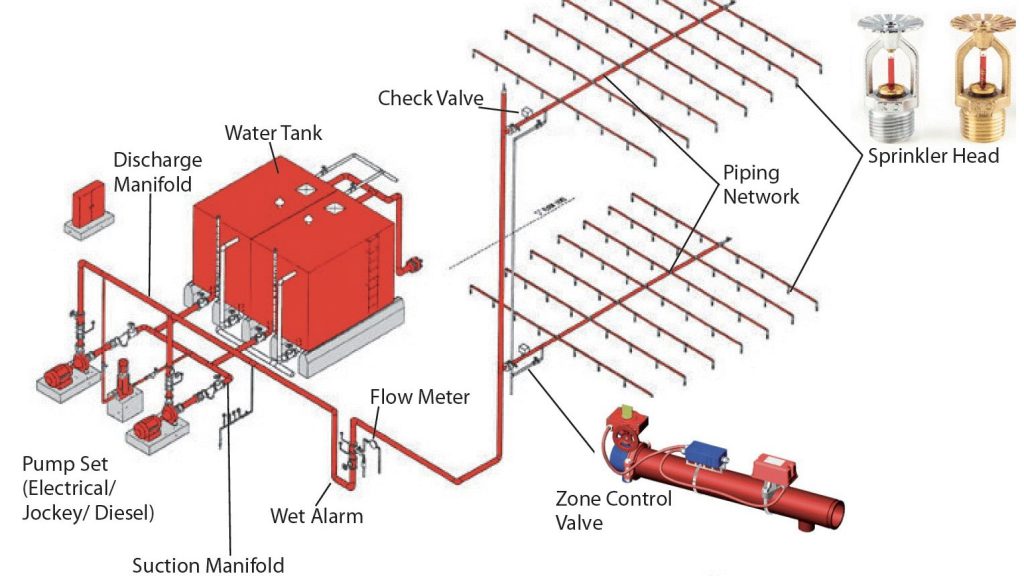
1. Piping Network, Valves, and Water Supply
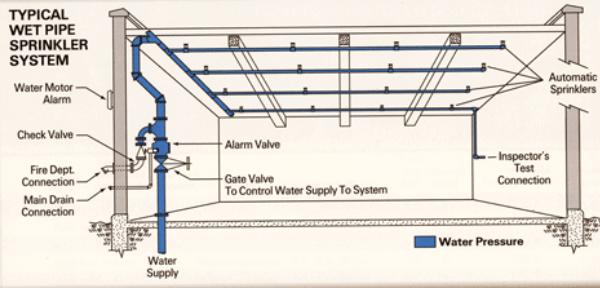
The piping network, valves, and water supply are interconnected to ensure water is delivered quickly and reliably when a fire occurs. In industrial buildings with elevated fire risk, the system must be designed to withstand high pressure and resist corrosion.
The primary function of the piping network is to convey water from the main source—such as a reservoir tank or fire pump—to all sprinkler heads. Pipes are designed for high-pressure operation to maintain adequate flow, with steel or copper commonly selected for their strength and corrosion resistance.
Valves serve as control devices that regulate water flow to the piping network and sprinkler heads. Several types of control valves are used in fire sprinkler installations, including main control valves, alarm valves, and zone control valves.
The water supply provides the required volume of water for fire suppression. In many facilities, this supply is stored in a ground water tank (GWT) installed below ground level to optimize space utilization and minimize the risk of contamination.
2. Types of Sprinkler Heads
Different types of sprinkler heads are selected based on room conditions, fire spread characteristics, and the structural layout of industrial buildings. Below are the most commonly used sprinkler head types in industrial fire protection systems.
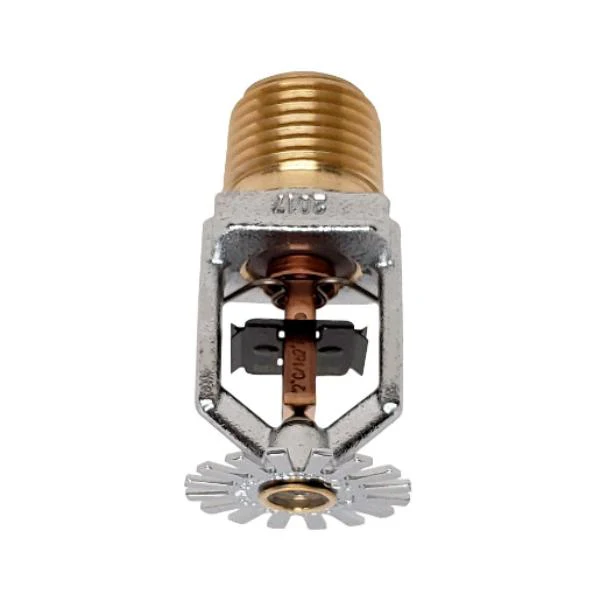
Pendent: Installed hanging downward from overhead piping, pendent sprinklers discharge water directly downward in a wide, umbrella-shaped spray pattern to cover a large floor area beneath. They are ideal for spaces with high, unobstructed ceilings such as factory halls and production areas.
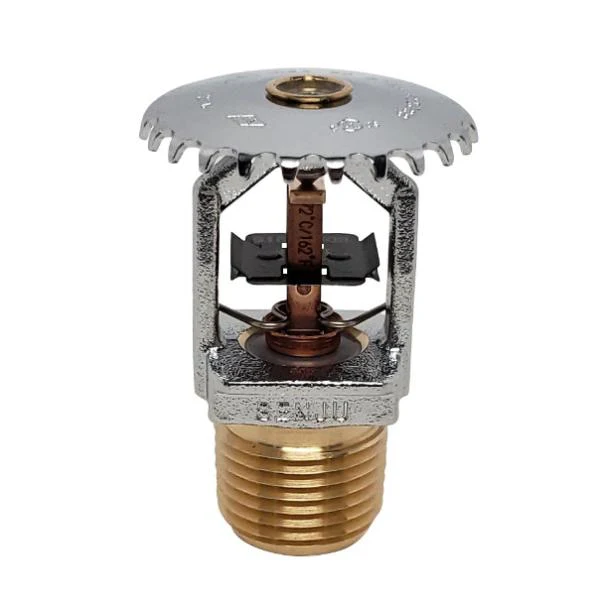
Upright: Mounted upright on top of the piping, upright sprinklers discharge water upward, which then strikes a curved deflector and is distributed downward in a radial pattern. This type is well-suited for areas with ceiling obstructions, such as exposed piping, beams, or trusses, commonly found in industrial warehouses.
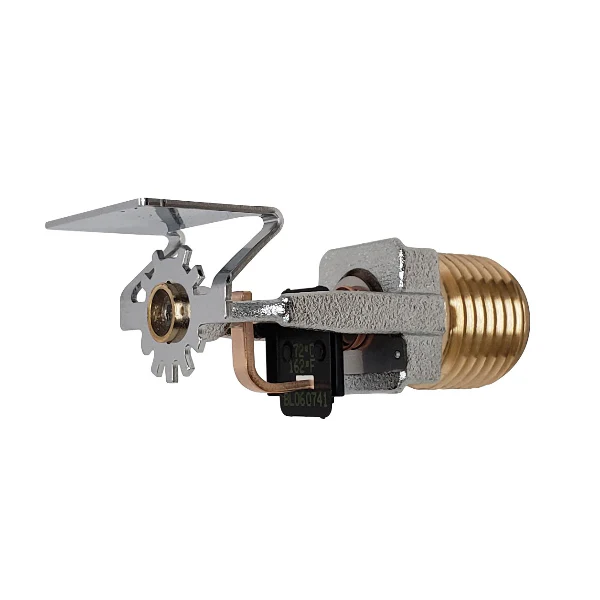
Sidewall: Installed on walls near the ceiling, sidewall sprinklers discharge water horizontally in a single direction with a semi-circular coverage pattern. They are typically used in narrow corridors, equipment rooms, offices, or hotel areas where ceiling-mounted sprinklers are impractical.
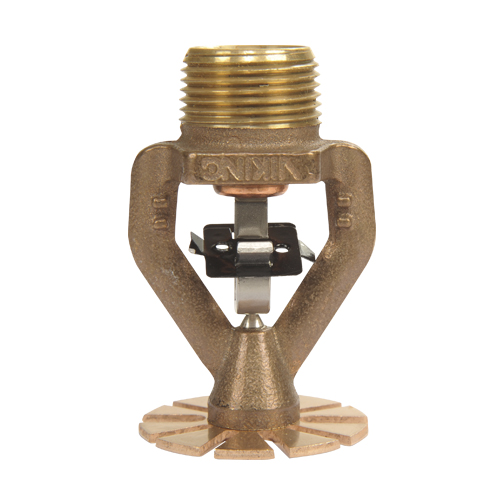
ESFR: Early Suppression Fast Response sprinklers are designed to respond extremely quickly to high heat and deliver large volumes of water with a powerful spray pattern capable of penetrating burning commodities. They are specifically engineered for high-piled storage and rack storage warehouses, where rapid fire suppression is critical.
3. The Role of the Sprinkler K-Factor in Determining Water Flow
The K-factor is a numerical value assigned to a sprinkler head that determines its water discharge rate (flow output). The selected K-factor must match the hazard classification and room design to achieve adequate coverage without causing excessive water discharge or flooding.
The K-factor is calculated using the following formula:
Q = K × √P
Where:
Q = flow rate (gallons per minute or liters per minute)
K = sprinkler K-factor
P = water pressure at the sprinkler (psi or bar)
The K-factor value is permanently marked on the sprinkler head itself. Typical examples include K=5.6 for light-hazard occupancies and K=11.2 or higher for high-hazard areas such as industrial warehouses or storage facilities.
NFPA 13 Standards for Sprinkler System Design
The primary standard governing sprinkler system design is NFPA 13. In Indonesia, this standard is complemented by SNI 03-3989-2000 for automatic sprinkler systems and Minister of Public Works and Housing Regulation No. 26 of 2008, which sets technical requirements for fire protection systems in buildings.
Under these standards, key aspects that must be considered in sprinkler system design include the type of sprinkler, available water pressure, required discharge flow rate, ceiling height, and the fire hazard classification of the protected space. In addition, sprinkler layout and placement must account for the following factors:
- Sprinkler spacing typically ranges from 3.0 to 4.6 meters, depending on the hazard classification.
- Distance from walls should not be too close; the recommended minimum clearance is approximately 1.8 meters.
- Sprinkler locations should avoid obstructions such as ventilation openings, beams, or other structural elements that may interfere with proper water spray distribution.
Key Stages of Sprinkler System Design
1. Hazard Identification & Space Protection Requirements
Occupancy hazard classification is the most fundamental input in the sprinkler system design process. This classification determines the applicable design criteria, including required water density and the design area in accordance with NFPA 13.
In industrial facilities, hazard classifications typically fall into Ordinary Hazard Group 1 or 2 and Extra Hazard Group 1 or 2. The higher the combustibility of materials stored or processed within the facility, the higher the hazard classification—and consequently, the greater the water demand required for effective fire suppression.
2. Selection of Sprinkler Head Type & K-Factor
Once the hazard classification has been established, the next step is selecting the appropriate K-factor, which defines the sprinkler discharge capacity. For ordinary hazard occupancies, commonly used K-factors include K-8.0. High-risk industrial environments—such as large factories, warehouses, and flammable material storage facilities—typically require higher-capacity sprinklers, such as K-11.2, K-16.8, K-25.2, or above.
After determining the K-factor, the appropriate sprinkler head type must be selected based on room conditions, expected fire spread patterns, and the structural configuration of the industrial building. Proper alignment between sprinkler type and hazard characteristics is essential to ensure effective water distribution and reliable fire control during an emergency.
3. Development of the Fire Sprinkler Layout
The sprinkler layout must be developed after a direct site survey has been completed. In accordance with SNI 03-3989-2000, industrial occupancies with ordinary and high fire risk must maintain a maximum distance of 2 meters between sprinkler heads and walls to ensure effective coverage and eliminate unprotected areas..
4. Hydraulic Calculations in Accordance with NFPA 13
Hydraulic calculations are a critical component of sprinkler system design, ensuring that adequate water flow and pressure are available at the hydraulically most remote sprinkler. These calculations determine pipe sizing, friction losses, residual pressure, and sprinkler discharge rates to meet NFPA 13 performance criteria.
The results are typically compiled into a detailed calculation and design report that documents system performance and confirms compliance with applicable standards. This documentation also serves as formal evidence for the Authority Having Jurisdiction (AHJ) that the sprinkler system design is technically sound, compliant, and safe for operation.
Why Work with a Specialized Sprinkler System Design Consultant Like Lumeshield?
Achieving a reliable and compliant sprinkler system design requires more than basic installation—it demands accurate engineering and a deep understanding of fire risk. By consulting with Lumeshield’s experienced specialists, you can ensure your industrial facility is protected by a system that performs effectively when it matters most.
Our Fire Protection System Design services include hazard classification, proper K-factor selection, and detailed hydraulic calculations in full compliance with NFPA 13. This integrated approach ensures optimal coverage, adequate water supply, and regulatory acceptance.
Design your industrial sprinkler system right from the start. Contact us today to begin your consultation.