
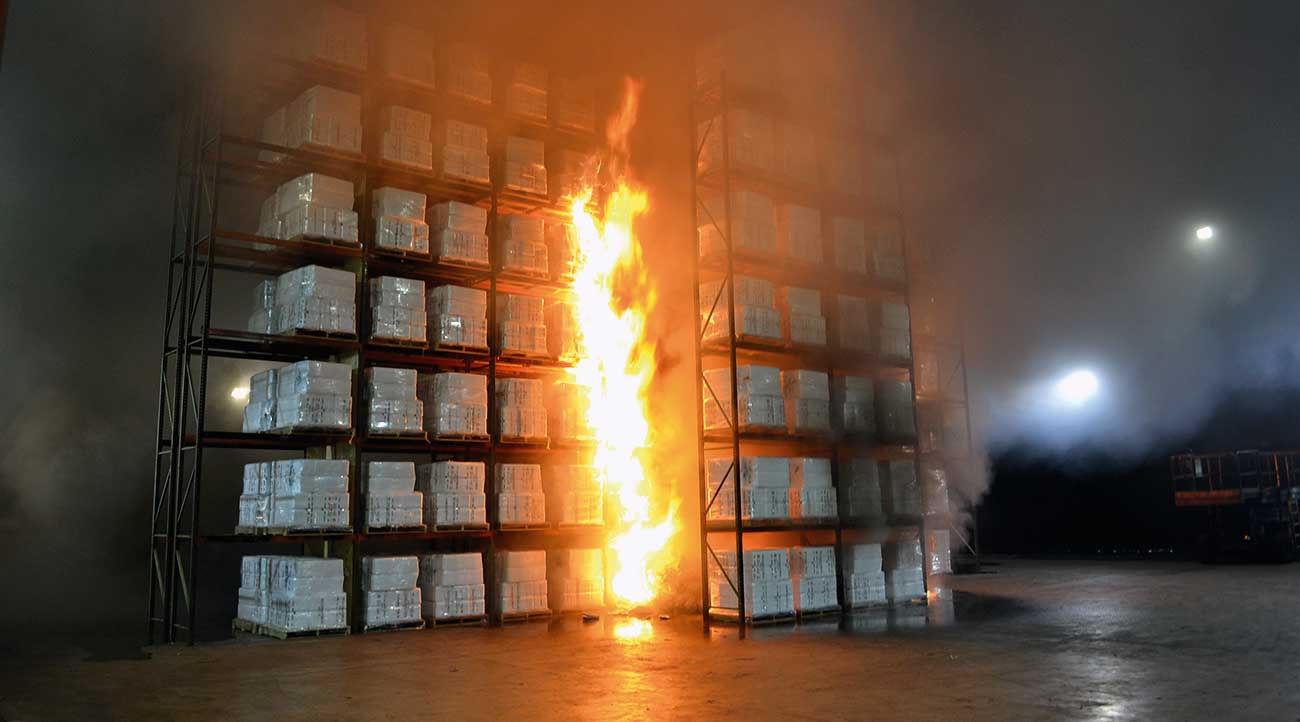
Warehouse fire risk is a serious threat that can directly impact multiple aspects of business operations. A single fire incident can result in significant asset losses and major disruptions to the supply chain. More importantly, worker safety is also at stake.
Warehouses or logistics storage facilities store a wide range of materials in large volumes and high-density configurations. Without proper risk management, fires in these areas can escalate rapidly and become difficult to control. Identifying warehouse fire risk sources at an early stage is essential to ensure that fire protection systems in warehouses are truly adequate.
Why Do Warehouses Have a High Fire Risk?
Warehouses are fundamentally designed to store large quantities of materials. Cardboard packaging, plastic wrapping, wooden pallets, textiles, and even chemical products contribute to a significant fire load.
The larger and denser the stored materials, the greater the heat release rate during a fire. As a result, flames can spread rapidly and grow uncontrollably before effective suppression measures take place.
However, warehouse fire risk does not arise from a single factor. A combination of building characteristics, material types, and operational activities often interacts and amplifies one another. This interaction explains why warehouse fires tend to escalate quickly and are particularly difficult to control.
Types of Warehouse Fire Risk
1. Fire Risk from Storage of Combustible Materials
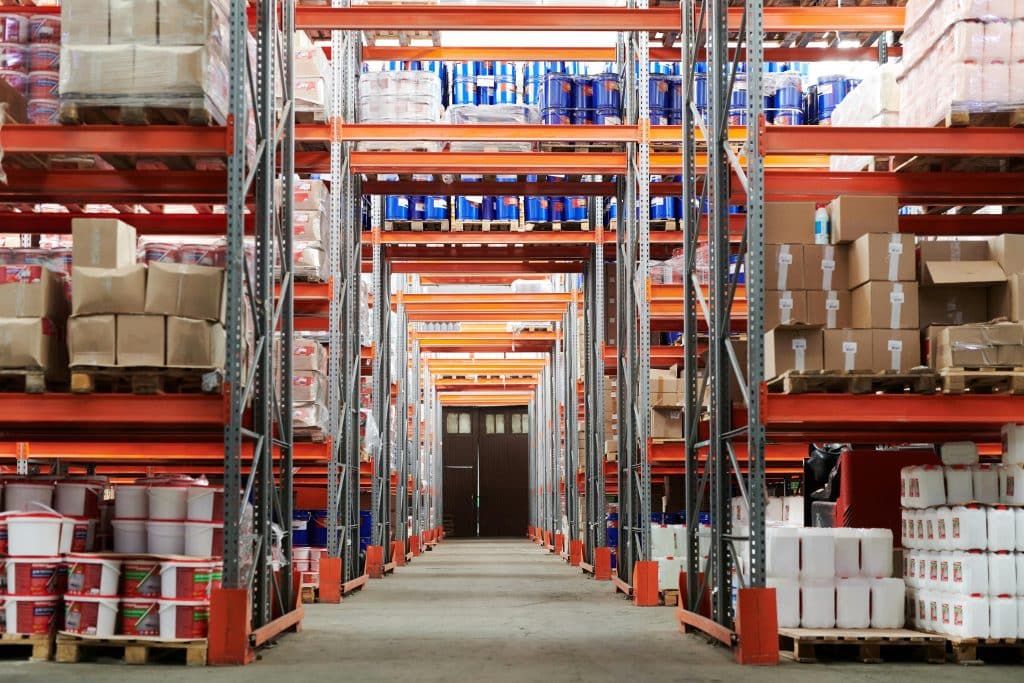
The type of commodities stored is a primary factor in warehouse fire risk. Materials such as cardboard, plastic packaging, textiles, wooden pallets, and certain chemical products have high combustibility and generate significant heat when burning.
This risk increases when:
- Materials are stored in large quantities and high-density configurations.
- Packaging accelerates fire spread (e.g., plastic shrink wrap).
- Hazard classifications are not updated when stored commodities change.
In warehouse hazard classification practice, incorrect commodity classification can result in fire protection systems—particularly sprinkler systems—being unable to control a fire under worst-case scenarios. As a result, the fire may escalate beyond the system’s design capacity.
2. Fire Risk from Operational Activities
In addition to stored materials, warehouse operational activities represent dynamic fire risk sources. Common examples include:
- Electrical arcing and excessive heat at forklift battery charging areas.
- Damaged cables and electrical connections due to vibration or forklift impact.
- Overheating of electric motors, conveyors, and distribution panels.
- Human error during material handling or equipment maintenance.
These operational risks are often not immediately visible and can increase with work intensity. Without periodic evaluation, potential ignition sources may go unmanaged and become fire triggers.
3. Impact of Rack Height and Storage Density
Rack height and storage density significantly influence the speed and scale of warehouse fires. High and tightly packed vertical storage can:
- Accelerate vertical fire spread through packaging and pallets.
- Causes heat accumulation at higher building levels.
- Reduce sprinkler effectiveness, as water discharge may not adequately penetrate densely stored commodities.
In many cases, fire protection system failure occurs not because systems are absent, but because they are not designed for the actual rack configuration and storage density. Layout changes without corresponding fire protection design adjustments can significantly increase the risk of fire escalation.
Fire Risk Assessment (FRA) for Warehouses
A Fire Risk Assessment (FRA) for warehouses is a systematic process to identify, analyze, and evaluate warehouse fire risk based on actual site conditions. An FRA helps address critical questions such as:
- Is the level of fire risk proportionate to the installed fire protection systems?
- Which areas present the highest fire risk?
- Are there protection gaps that could become major findings during audits?
The results of a warehouse Fire Risk Assessment form the technical basis for decision-making—whether for fire protection system improvements, operational adjustments, or preparedness for insurance audits.
Combustible Storage Assessment
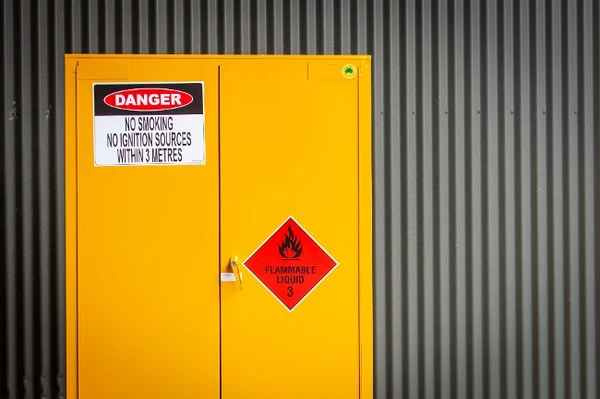
As a key element of a warehouse Fire Risk Assessment (FRA), Combustible Storage Assessment is a technical evaluation process used to assess the level of fire hazard arising from stored materials and their storage arrangements within a warehouse.
Warehouse fires are almost always influenced by storage characteristics. Therefore, this evaluation focuses not only on what is stored, but also how, how much, and where materials are stored.
Without this assessment, warehouses face the risk of under-protection, even when fire protection systems appear complete during visual inspection. A Combustible Storage Assessment is essential to:
- Ensure the actual hazard level is aligned with the fire protection system design.
- Identify risk changes due to increased storage volume, changes in commodity type, or layout modifications.
- Evaluate whether current storage conditions could lead to rapid fire escalation.
- Avoid major findings during fire safety or insurance audits.
The Critical Role of Warehouse Fire Risk Consultants
Warehouse fire risk cannot be effectively managed through assumptions or administrative compliance alone. An objective Fire Risk Assessment (FRA) based on actual site conditions is essential to ensure that fire protection systems are proportionate to the hazard level within storage areas.
Through Lumeshield’s Fire Risk Assessment services, the warehouse you manage will receive a comprehensive evaluation of warehouse fire risk, the effectiveness of fire protection systems, and potential major findings before an audit or incident occurs. The technical recommendations provided help protect assets and ensure operational continuity.
Take control of your warehouse fire risk early. Contact us to start your consultation.